Why Your AI Tutorials are Keeping You Poor
Stop being a tutorial follower. Learn the 5 types of content that build authority in the AI agentic solutions niche and move from VA to Strategic Partner.

Hi, it's G again.
If you spend your nights watching "How to use ChatGPT" tutorials on YouTube, I have some bad news. You’re probably working harder but getting paid exactly the same as last year.
The internet is flooded with Step-by-Step guides. Step 1: Open Claude. Step 2: Paste this prompt. Step 3: Profit.
But have you noticed? Everyone is doing the same thing. Every VA on LinkedIn is now an "AI Expert." Every freelancer has "Prompt Engineer" in their bio. When everyone follows the same tutorial, your skills become a commodity. And commodities are cheap. (Relate?)

If you want to actually make money in the AI agentic solutions space, you have to stop being a "tutorial follower" and start being an Authority.
Authority isn't about knowing which button to click. It’s about how you think and how you show that thinking to the world.
Here is the secret: Even if you aren't an "expert" yet, there are 5 types of content that will make you look like one. And no, I’m not telling you to be sneaky. I’m telling you to show your work in a way that actually builds trust.
1. The Reaction (Credibility by Context)
You’ve seen this before. An anthropologist reacts to a monkey video. A nutritionist reacts to a diet trend.
In our world, this looks like you reacting to a "bad" AI automation or a viral tech tweet. When you put your face (or your voice) next to a trending topic, you borrow that attention. But more importantly, you give people immediate context on who you are.
If you have "AI Agent Architect" on the screen while you're explaining why a certain automation will fail, that’s instant credibility. They have a reason to listen to you because you're adding value to something they already care about.
2. The Audit (Show, Don’t Tell)
This is what actually grew my account.
Instead of saying "I'm good at AI," I started breaking down what was already working. I did audits of how top creators were using their tools. I showed why their systems were efficient and how others could copy them.
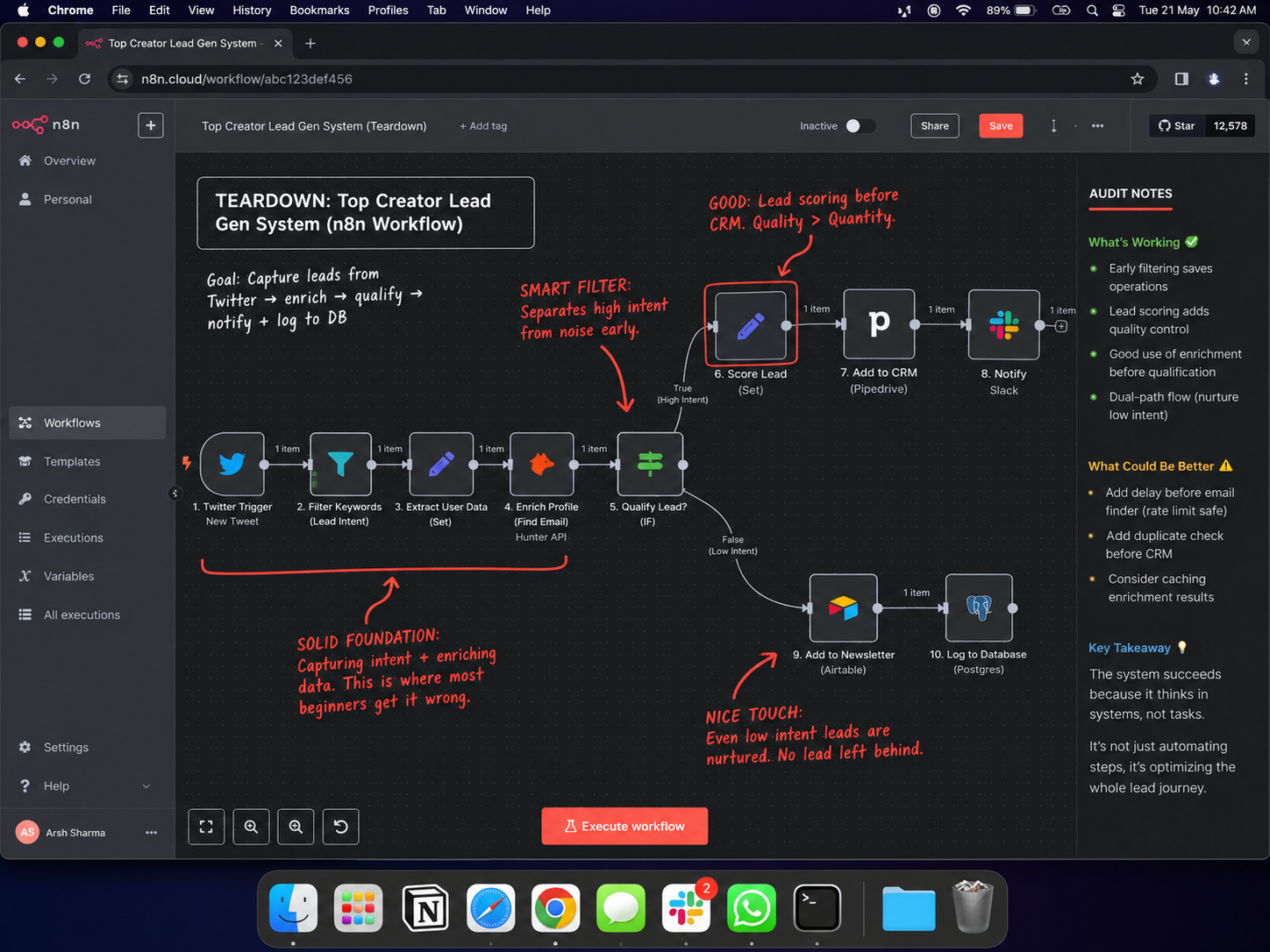
Think like a graphic designer breaking down a famous logo. When you audit a system, you are showing people your expertise rather than just claiming you have it. You're proving you can see the "matrix" behind the automation.
3. The Contrarian (The Pattern Interrupter)
This is my favorite. Take a common belief in the AI industry and flip it on its head.
"Prompt Engineering is a dead skill."
"Stop using ChatGPT for your business."
"Why your AI Agent is actually making you slower."
When you say the opposite of what everyone else is saying, you stand out immediately. It’s counter-positioning. Of course, kailangan mo itong i-back up with real logic or data, or else you'll just look like a basher. (lol) But when you do it right, you establish massive trust because you’re the only one telling the "truth."
4. The Scenario (Relatability)
This is the "What I would do if..." content.
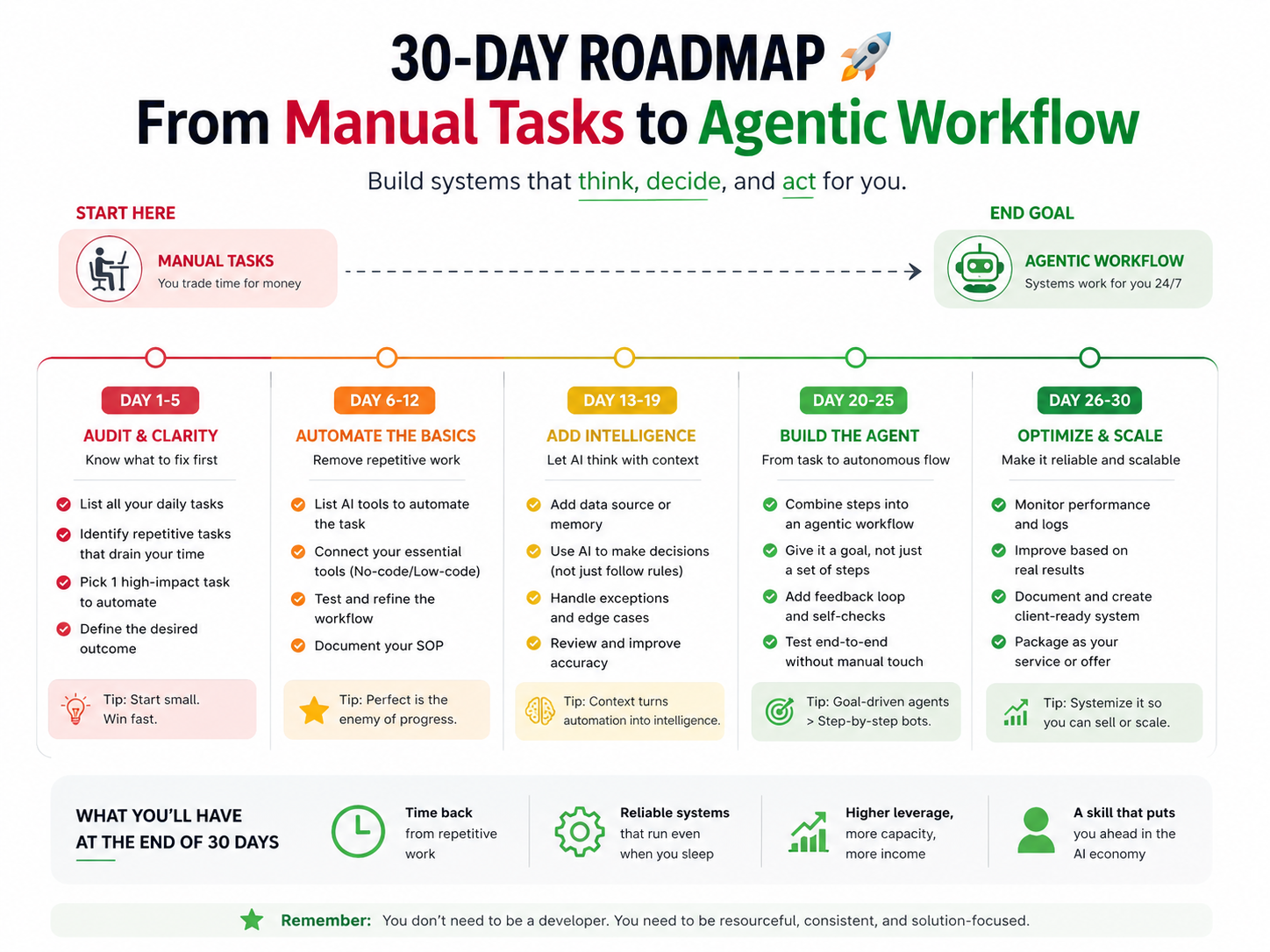
"What I would do if I had $0 and wanted to build an AI agency in 30 days."
"What I would do if I was a VA earning 30k a month and wanted to double it using Agents."
This works because the reader sees themselves in the scenario. The advice feels practical and relevant. Parang kinakausap mo sila directly. It moves the conversation from "AI is cool" to "AI can solve MY specific problem."
5. Common Problems, Unique Solutions
This is the hardest one, but it has the highest payoff.
Look at the questions everyone is asking. "How do I stop AI from hallucinating?" or "How do I connect AI to my data?"
Instead of giving the same generic answer everyone else gives, you provide a unique framework or a method that only you use. It’s that "Oh my God, I’ve never heard it explained like that before" moment.
If you don’t have your own "framework" yet, don’t worry. That comes with time. But for now, focus on the first four.
Why this matters for you
Sa totoo lang, most Filipino freelancers are stuck in "Tutorial Hell." They know how to follow instructions, but they don't know how to lead a client.
When you start posting these types of content, you stop being a "service provider" and you start being a "strategic partner." And strategic partners get paid the big bucks.
Stop watching. Start auditing. Start reacting. Start standing out.
Kaya mo 'to.
(Hi, self.)